The meter on your wall, in plain numbers
A smart meter is an electric meter that logs your use at least once an hour and reports it to the utility at least once a day. At the end of 2025, about 128.8 million US residential meters fit that description, close to 87 of every 100. The ones described in the documents on this site report by radio. Every utility we checked will swap one for a meter without a working radio if you ask, and every one of them charges for it.
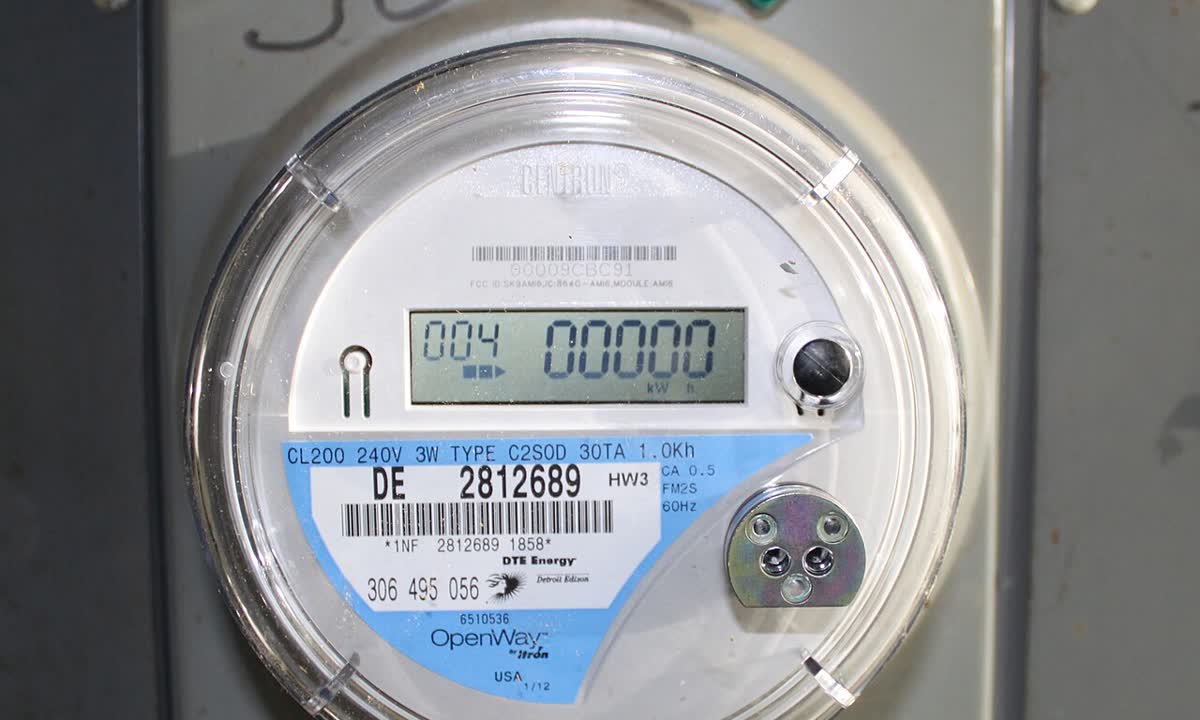
This site puts those numbers next to the documents they came from: federal survey tables, utility tariffs, commission orders and the few measurement studies that put a figure on the radio signal itself.
What counts as a smart meter
The federal definition is short. In the instructions for its yearly utility survey, Form EIA-861, the Energy Information Administration defines advanced metering infrastructure (AMI, the formal name for smart meters) as meters that "measure and record usage data at a minimum, in hourly intervals and provide usage data at least daily to energy companies."
Two older kinds of meter show up in the same data. Automated meter reading (AMR) meters send a one-way billing signal, sometimes picked up by a van driving past. Standard meters are read by a person, usually once a month.
That split matters if you opt out, because what you get back depends on the utility. Most PG&E opt-out customers get an analog meter, DTE installs a digital meter without radio parts, and BGE puts in an older AMR-type meter. Either way the utility has to send someone out. SCE and SDG&E both say their fees exist to cover that visit and the manual reads after it.
What it sends, and how often
Southern California Edison describes the content in one line of its smart meter FAQ: the meter transmits "the amount of electricity you use and when you use it."
The timing is less obvious. A meter on a mesh network doesn't send one reading a day and go quiet. It sends thousands of very short bursts, and most of those carry data for the neighbors' meters. In a 2011 filing with the California Public Utilities Commission, PG&E said a typical electric meter on its system was on the air for about 45 seconds a day in total. The mean was about 62 seconds, and meters at the 99.9th percentile reached 875 seconds. Those numbers come from the utility and its vendors and describe one network in 2011. Our RF page sets them beside the measurements and the federal limit.
- 147.1 million
- smart (AMI) electric meters in the US at the end of 2025, all customer types
- 86.9%
- share of residential meters that were AMI in 2025
- about 45 seconds
- typical daily transmit time PG&E reported for its meters in 2011
- $5.50 to $34
- monthly opt-out charge at the nine utilities we checked
Source: EIA Electric Power Annual, Table 10.5; PG&E filing to the CPUC, 2011; utility tariffs and opt-out pages in our fee table.
How many homes have one
EIA's count for 2025, published in October 2026, shows 147.1 million AMI meters across all customer types, and 128.8 million of them are on homes. In 2015 the total was 64.7 million. States sit far apart: Maine, Pennsylvania, Colorado and Michigan are above 97% of residential meters, while Massachusetts, Connecticut and New Hampshire are under 22%. The yearly series and a state table are on our numbers page.
Opting out, and what it costs
Opt-out fees are set utility by utility, usually with a one-time charge and a monthly meter-reading charge. California regulators set the first ones in Decision 12-02-014 in February 2012: $75 up front and $10 a month, or $10 and $5 for households on the low-income CARE rate. Outside California, the monthly charges we found run from $5.50 at BGE in Maryland to $34 at Eversource in Massachusetts. The fee table covers nine utilities in seven states, with a link to the tariff or page behind each row.
People do different things once they've read up on meters. Some opt out. Some move a bed off the wall the meter is mounted on, some buy a consumer RF meter, and some shop at places like the EMFCALM store, which sells EMF stickers for phones and other devices. We don't review products here. The pages stick to what the documents say.
Where the numbers come from
- Meter counts come from EIA's Electric Power Annual and the Form EIA-861 data files, 2007 through 2025.
- Fees come from each utility's tariff sheet or opt-out page, or from the commission order that set them.
- Radio levels and transmit times come from the California Council on Science and Technology's 2011 report, the Electric Power Research Institute case study it relied on, PG&E's filing, and the FCC exposure limits in 47 CFR 1.1310.
When we did arithmetic, such as adding a setup fee to twelve monthly charges, the page says so. Fees change, so treat a number here as the question to ask your utility, not as a quote.
The spread is the part that stuck with us. A low-income household in California pays $70 in the first year to keep a meter reader coming. A regular customer of Eversource in Massachusetts pays $450 for the same thing.
Meter on the Wall collects utility tariffs, commission decisions and federal energy data about smart meters and lays the numbers out side by side. It is not affiliated with any utility or regulator. Fees change, so confirm yours with your utility.